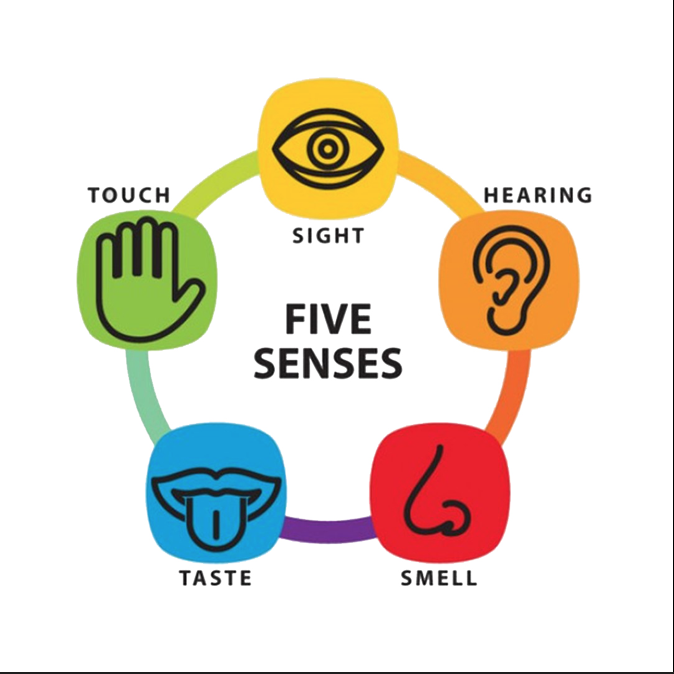
In this session we explored sensory perception in the arts as a way to better understand listening and hearing in my own personal Sound arts practice. What stood out to me in this lecture is the idea that senses are not neutral or universal, they’re shaped by our personal experience, cultural and politically through our lives. The way we know through our our world through our senses isn’t fixed. It has been structured through systems of power.
As a sound practitioner, thus made me question how I approach immersive environments. I’ve always been drawn to image and projection, light and large scale visuals in music spaces. However, this session made me reflect on whether I am unintentionally reinforcing the dominance of vision in Western knowledge. At the same time I think immersive sound can disrupt this idea of western knowledge or dominance.
One of the exercises we did when thinking about our senses combined with our practise was to look back at our Gallery 46 exhibition and try and think about what it would smell, taste and feel like if we had to assign a sense to our work. My worked was exploring the impact of nostalgia and memories of my childhood. I said if it would be a smell I thought go soil or the smell of pines, for taste I said ginger and for touch I said freshly washed sheets. These are all things I remember from my childhood so it was interesting to put them into content.
For my creative practise I want to keep this idea of immersive building. For my collaboration project I am planning on collating with a projection student to create a piece that immerses the viewer. I could think about the senses when creating this piece and try to encourage myself to use smell or touch more to navigate the person experiencing it into deeper immersion.
When was the last time I consciously focused on listening?
We talk a lot about conscious listening in Sound Arts practice. However, it is something that I still struggle to practice. Nowadays I meditate to try and calm myself before a busy day, I have noticed the way in which you have to focus on your breath or the noises you hear to actively feel present within your environment.
I have always been interested in how the human mind works, the triggers which we all feel individually. Going forward in this project, looking into how senses and active listening can change the way in which you feel present within the world. I have already done a previous project on tuning into your environment but being present is something different.
Inverse Effectivness
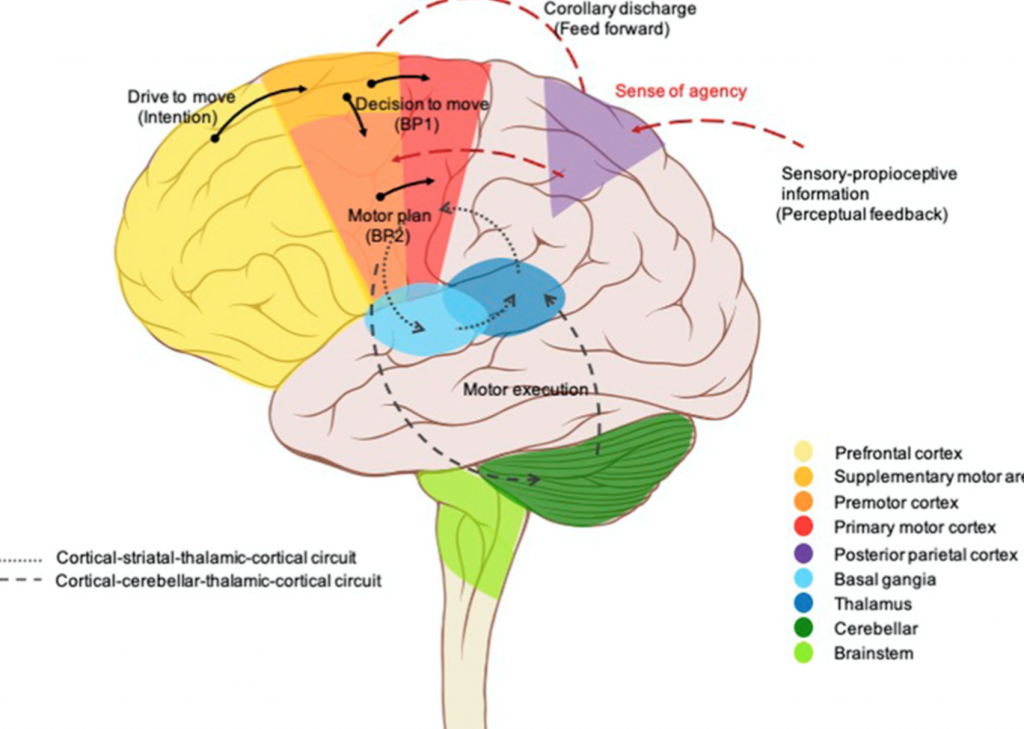
I have been looking into this idea of inverse effectiveness. This is the idea that when individual sensory signals are weak, combining them leads to a much stronger overall perception. The weaker the individuals signals are the bigger the befit when they are combined.
Example
- You barely hear someone speaking in a very noise room (weak signal), seeing their lips move (visual signal) helps a lot.
- When their voice is loud and clear (strong signal), watching their lips doesn’t help a lot
This idea is widely studied in Neuroscience to understand why the brain uses sound, touch, sight and smell to improve understanding in challenging situations.
Inverse effectiveness shows that perception isn’t just about how strong one sense is, but how senses work with each other when things are unclear. When information is faint or uncertain, the brain leans more heavily on combining senses like listening more carefully while also observing small visual cues, to build a clearer picture of what’s going on.
Going forward, I want to develop a sound piece based around the idea of inverse effectiveness and explore how weak unclear sensory information can effect the listener. What interests me the most about this idea is that it challenges the assumption that clear sensory input means more clarity.